Heavenly Stems (天干) and Earthly Branches (地支) are the symbolic building blocks of a Bazi chart. Each pillar contains one stem and one branch, creating a layered view of time and meaning.
A simple way to understand them is this: stems are more visible and expressive, while branches are deeper, seasonal, and layered. Together they describe both surface qualities and hidden influences.
The Ten Heavenly Stems
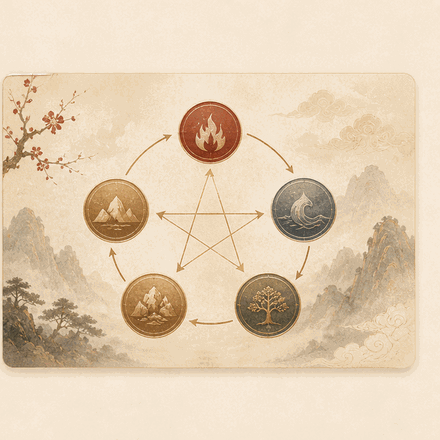
The ten stems are linked with Yin-Yang and the Five Elements: Wood, Fire, Earth, Metal, and Water. Each element appears in a Yin and Yang form, creating ten symbolic expressions.
In a reading, stems can suggest visible behavior, external style, and how certain qualities may appear in daily life.
The Twelve Earthly Branches
The twelve branches are often connected with zodiac animals, seasons, months, and hidden elements. They carry more layered information than the animal names alone.
For example, a branch may contain one or more hidden stems. This is why Bazi is more detailed than a simple Chinese zodiac reading.
How Stems and Branches Work Together
The stem of a pillar can be seen as the visible part of a theme, while the branch provides the root or environment behind it. When they support each other, a theme may feel smoother. When they conflict, a theme may feel more complex or dynamic.
Why This Matters in Bazi
Understanding stems and branches helps readers move beyond memorized meanings. It shows how a chart is built as a system, where each symbol gains meaning through its relationship with the others.
A Grounded Way to Study Them
Begin with the element of each stem and branch. Then learn seasonal associations, hidden stems, and basic interactions. Over time, the chart becomes easier to read as a network of symbolic relationships.
Yin and Yang in the Stems
Each of the Five Elements appears as a Yin and Yang Heavenly Stem. Yang Wood may be compared with a tall tree, while Yin Wood may be compared with vines or grass. These images are symbolic, not literal. They help learners remember the texture of each stem.
The Yin-Yang distinction gives Bazi a refined language. Two charts may both contain Wood, but Yang Wood and Yin Wood express different styles of growth, flexibility, and response.
Branches as Time Containers
Earthly Branches are more than zodiac animals. Each branch can contain hidden stems, seasonal information, and relationships with other branches. This is why the branch layer is often considered deeper and more contextual than the visible stem layer.
For example, a branch may support the visible stem above it, weaken it, or introduce another hidden theme. Reading this relationship is part of understanding the pillar as a whole.
How to Study the System
Start by learning the element and Yin-Yang quality of each stem. Then learn the animal and season of each branch. After that, study hidden stems and branch interactions. This sequence helps the system feel organized instead of overwhelming.
This content is for cultural, entertainment, and self-reflection purposes only. It should not be used as financial, medical, legal, or life-critical advice.
Bazinova cultural use note