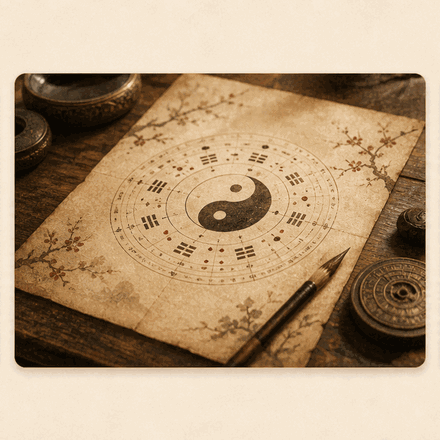
The Rabbit, known as the Mao branch, is one of the twelve Earthly Branches used in a Bazi chart. In Bazi, it is not read only as a zodiac animal; it is a chart position with element, season, hidden stems, and relationship patterns.
Beginners often recognize Rabbit from the Chinese zodiac, but a Four Pillars reading asks a more precise question: where does Mao appear, what does it store, and how does it interact with the rest of the chart?
Quick Answer
In Bazi, the Rabbit (Mao) branch is associated with pure Wood and gentle spring growth, the mid-spring and focused Wood energy, and hidden stem themes of Yi Wood. It can describe refinement, relationships, growth, sensitivity, aesthetics, and social softness, but it should always be read with the pillar position, Day Master, season, hidden stems, combinations, clashes, and timing.
What the Mao Branch Represents
The Mao branch carries a specific seasonal and elemental quality. Its core association is pure Wood and gentle spring growth, but the full reading also depends on whether it appears in the Year, Month, Day, or Hour Pillar.
When Mao appears in a chart, it may show refinement, relationships, growth, sensitivity, aesthetics, and social softness. This is symbolic language, not a fixed personality label.
Hidden Stems and Inner Structure
The hidden stems connected with this branch are important because they show what is stored beneath the surface. For Mao, beginners should pay attention to Yi Wood.
A hidden stem may be less visible than a Heavenly Stem, but it can still provide roots, quiet support, or a theme that becomes active during timing cycles.
How Pillar Position Changes the Meaning
In the Year Pillar, Mao may describe broad background or public context. In the Month Pillar, it becomes more important because it contributes seasonal strength.
In the Day or Hour Pillar, the same branch may feel more personal, relational, developmental, or future-facing. Placement changes emphasis.
Branch Relationships
Mao is often discussed with Peach Blossom themes, Wood combinations, and You Rooster clash.
A combination, clash, harm, punishment, or seasonal relationship does not create one automatic result. It points to movement, friction, cooperation, pressure, or repeated themes that need chart context.
Career, Relationship, and Timing Context
In career reading, Mao may show how the chart handles refinement, relationships, growth, sensitivity, aesthetics, and social softness through work style, pressure, resources, or expression. It does not name one fixed profession.
In relationship and timing reading, the branch can become more noticeable when Luck Pillars or annual cycles activate it. Treat this as symbolic context rather than a guaranteed event.
Common Beginner Mistakes
The first mistake is reading Rabbit only as zodiac personality. The second is ignoring hidden stems and pillar position.
A better method is to read the branch as part of the whole Bazi structure: Day Master, Month Branch, Five Elements, Ten Gods, and timing together.
FAQ
Is Rabbit in Bazi the same as the zodiac animal?
Not exactly. The zodiac animal is one familiar layer, but Bazi reads the Mao branch by element, season, hidden stems, pillar position, and interactions.
Is the Mao branch good or bad?
No branch is universally good or bad. The meaning depends on whether Mao supports, pressures, or redirects the full chart.
Can Mao affect timing?
Yes. Luck Pillars and annual cycles can activate a branch, but timing should be read as context rather than a guaranteed outcome.
This content is for cultural, entertainment, and self-reflection purposes only. It should not be used as financial, medical, legal, or life-critical advice.
Bazinova cultural use note