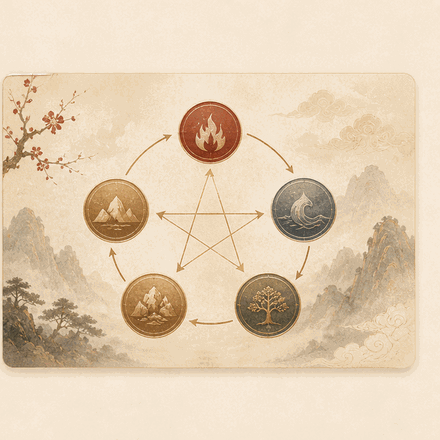
Examples make Bazi easier to learn because they show how symbols work together. This article uses a teaching chart rather than a real person's private data. The goal is to demonstrate reading order and interpretation logic.
The example focuses on a chart where Seven Killings appears with Resource and Output support. We will use it to study pressure, discipline, risk, and how a strong role can become constructive.
Quick Answer
A useful Bazi chart example starts with the Day Master, checks season and roots, translates elements into Ten Gods, then adds timing questions. This example shows how to move from chart symbols to practical reflection without turning one symbol into a final answer.
Example Setup
Imagine a chart where the main theme is a chart where Seven Killings appears with Resource and Output support. The exact pillars are less important than the reading method. A real reading would always confirm birth data, calendar conversion, hidden stems, and current timing cycles.
For learning, we focus on the visible pattern and ask what it might suggest.
Step 1: Identify the Day Master
The Day Master is the reference point. Without it, the other elements cannot be translated into Ten Gods.
In this example, the Day Master shows the person at the center of the pattern. We first ask whether it has support, whether it is pressured, and whether the chart gives it a clear path of expression.
Step 2: Check Season and Roots
Season shows the climate of the chart. Roots show whether an element has support in the Earthly Branches.
A theme that looks strong in the Heavenly Stems may be less stable without roots. A hidden theme may become important when timing activates it.
Step 3: Translate Into Ten Gods
After identifying the Day Master, each element becomes a role. Resource may show learning and support. Output may show skills and expression. Wealth may show management and practical resources. Officer may show standards and pressure. Peer may show friends, competition, and selfhood.
This example is useful because it shows how one pattern can point to pressure, discipline, risk, and how a strong role can become constructive.
Step 4: Read the Main Pattern
The main pattern should be described carefully. Instead of saying "this chart means one exact outcome," ask what the chart is emphasizing.
A chart may emphasize skill turning into practical value, pressure becoming discipline, relationship awareness, or the need for better balance between support and output.
Step 5: Add Timing Questions
Luck Pillars and annual cycles can activate parts of the chart. In this example, timing questions might include:
- Which element becomes stronger during the current Luck Pillar?
- Does the year activate a key branch?
- Is the chart receiving support or extra pressure?
- Which theme deserves practical attention now?
These are questions for reflection, not promises of single final answers.
What This Example Teaches
This example teaches three habits:
- 1. Read the chart in order.
- 2. Translate symbols into relationships.
- 3. Keep interpretation practical and grounded.
The more examples you study, the easier it becomes to see patterns without overclaiming.
Next Step
Use the related Bazinova tool or guide linked from this page, then compare your own chart with the same reading order.
FAQ
Is this a real Bazi chart?
No. It is a teaching example designed to show reading method. Real charts require exact birth information.
Can one example explain every chart?
No. Examples teach method. Each real chart needs its own context, timing, and full structure.
Should beginners start with examples?
Yes, after learning the basic terms. Examples help connect Day Master, Five Elements, Ten Gods, and timing into one reading process.
This content is for cultural, entertainment, and self-reflection purposes only. It should not be used as financial, medical, legal, or life-critical advice.
Bazinova cultural use note